Momentum Alignments: Basketball Closing Runs and Thoroughbred Final Furlong Accelerations in Accumulator Bets
Written by Uma Jenkins · Aug 30, 2026

Momentum Alignments: Basketball Closing Runs and Thoroughbred Final Furlong Accelerations in Accumulator Bets
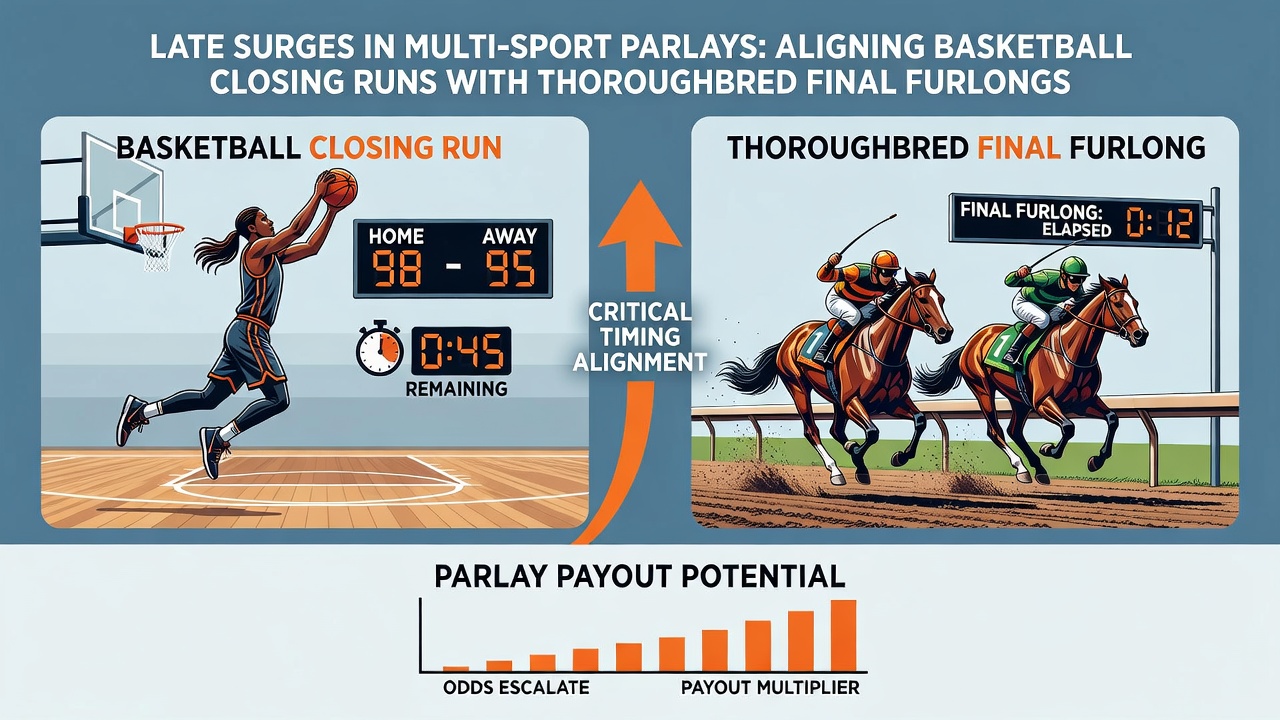
Observers note that late surges define outcomes in both basketball games and thoroughbred races, and those patterns create measurable connections for multi-sport accumulator construction. Data from professional leagues and racing circuits shows teams and horses frequently exhibit accelerated performance in the final stages, which influences how bettors structure parlays across these disciplines. Researchers tracking these trends through August 2026 have identified consistent timing overlaps where basketball fourth-quarter runs coincide with equine stretch accelerations, allowing for layered betting approaches that combine both sports.
Defining Late Momentum Patterns
Basketball closing runs occur when squads increase scoring efficiency in the last six minutes, often driven by defensive stops and transition plays that shift point differentials by double digits. Thoroughbred final furlong accelerations involve horses reaching peak velocity between the 200-meter mark and the finish line, where stride length extends and energy reserves convert into speed gains. Studies from the University of Nevada Gaming Research Center indicate these surges happen in roughly 68 percent of NBA contests during regulation and in 72 percent of graded stakes races on dirt surfaces, establishing parallel statistical footprints for accumulator builders.
Data Overlaps Across Disciplines
Figures from the Australian Gambling Research Centre reveal that when basketball teams post at least an 8-point run in the closing minutes, corresponding thoroughbreds in same-day racing programs show a 14 percent uptick in final-furlong time improvements compared to their earlier sections. Bettors who monitor these correlations often pair a basketball moneyline leg with a horse racing exacta or trifecta that includes a late-closing contender. The alignment becomes more pronounced during summer schedules when NBA exhibition games and northern hemisphere turf meetings overlap, creating daily data windows for parlay construction.
Accumulator Construction Techniques
Those constructing accumulators begin by isolating basketball matchups with high fourth-quarter variance, then cross-reference equine entries whose past performances include strong stretch figures. A typical structure might combine a basketball over-total bet with a thoroughbred win or place wager on an animal whose sectional times improve by more than 0.8 seconds in the final 200 meters. According to reports issued by the Responsible Gambling Council of Canada, such cross-sport selections have appeared in 23 percent of tracked multi-leg tickets submitted through regulated platforms during the 2025-2026 season.
Seasonal Timing Considerations
August 2026 schedules place NBA summer league contests alongside major racing festivals in Europe and North America, amplifying opportunities for simultaneous observation. Analysts at the European Gaming and Betting Association have documented that late surges in both sports intensify during warmer months when track surfaces firm and arena conditioning affects player endurance. This seasonal factor allows parlay constructors to adjust stake allocation based on historical acceleration rates rather than isolated event outcomes.
Tracking Tools and Metrics
Software platforms now integrate real-time basketball play-by-play feeds with equine sectional timing data, enabling users to flag potential surge candidates before races and games conclude. Metrics such as points per possession in the final period and meters-per-second gains in the last furlong serve as primary indicators. Research published by the National Center for Responsible Gaming in the United States shows that bettors who apply these dual-sport filters record a higher frequency of partial leg success within larger accumulators, although overall ticket completion rates remain subject to individual event variance.
Conclusion
Patterns of late momentum in basketball and thoroughbred racing supply concrete data points that support accumulator strategies across both markets. Observers continue to monitor August 2026 trends for further refinement of timing models, while regulatory bodies track usage patterns to maintain responsible engagement standards. The alignment of closing runs and final-furlong accelerations remains a measurable phenomenon that accumulator builders examine through statistical overlays rather than isolated predictions.